There was a time when “vibe coding” felt like magic. You’d open a chat with your favorite AI model, throw out a few prompts, and suddenly you had a working app before lunch. Andrej Karpathy — the guy who actually coined “vibe coding” — made it sound like the future of development. And for a while, it was. But recently, the vibe master himself dropped a confession: he’s past it. For his latest project — a from-scratch chatbot called nanochat — Karpathy ditched vibe coding entirely due to vibe coding limitations. Eight thousand lines of clean, hand-written code. No AI copilots. No prompt-driven shortcuts. Just raw, deliberate building.
His reason? The AI tools didn’t work well enough. In his own words, they were “net unhelpful.”
That’s not a small statement coming from the man who practically defined the movement. It’s a signal. The vibes are great for speed — but they don’t get you all the way to production.
The rise and reality of vibe coding
Vibe coding started as a creative way to build software with AI help. You’d describe what you wanted, tweak the code AI gave you, and move fast. It felt like the next step in AI-powered MVP development — a new way to build quickly without the heavy setup or process.
It worked well for early prototypes. Startups loved it because they could show something real in days instead of months.
But soon, many teams realized a problem: AI can generate code, but it doesn’t generate real understanding.
The hidden limits of AI-generated code
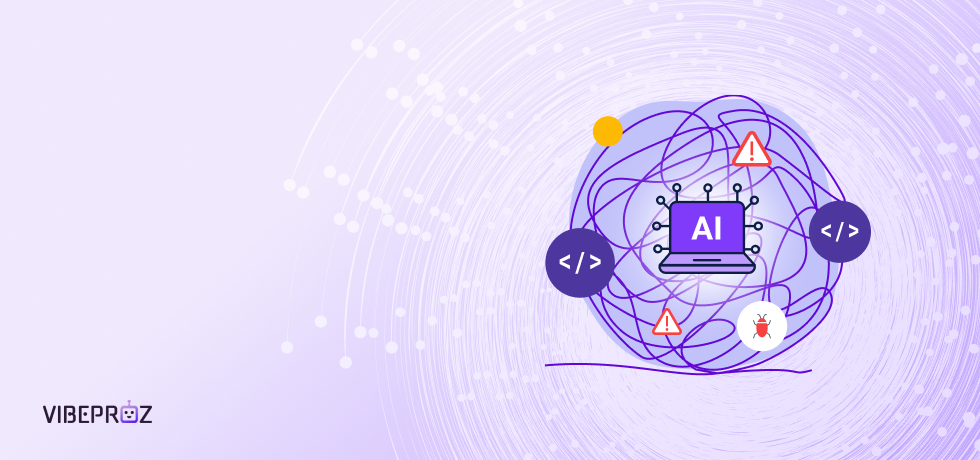
When AI writes your app, it doesn’t really “know” your business logic or product goals. The code might look clean, but underneath, it often lacks strong architecture, security, or scalability.
That’s why many vibe-coded apps break when pushed to production. Developers start seeing errors that make no sense. The logic feels disconnected. The codebase becomes fragile.
AI can help you move fast, but it can’t replace real engineering, and that’s where vibe coding limitations start showing up in every serious build.
When the magic fades
The first few days of vibe coding are exciting. You build faster than ever and feel unstoppable. But after a few weeks, the cracks appear.
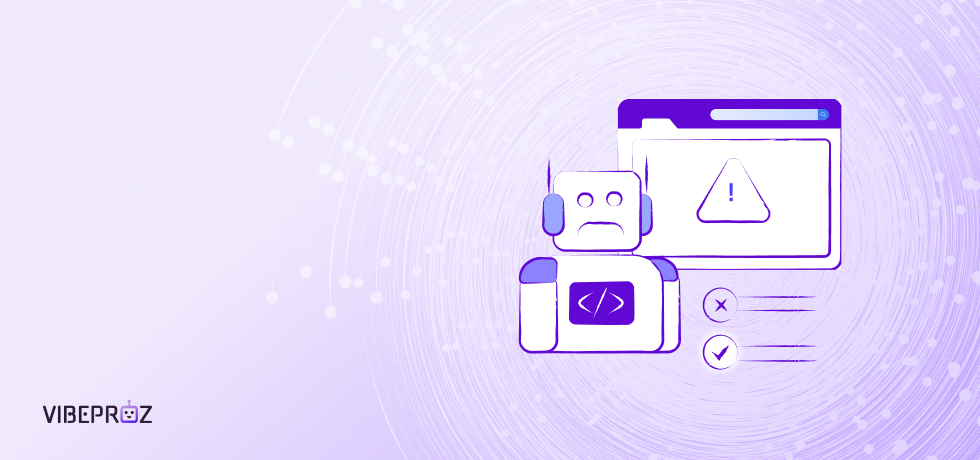
Apps crash under real user load. Authentication breaks randomly. And your CI/CD pipeline turns into a mess of scripts that no one understands.
Debugging becomes painful — because you’re not just fixing code, you’re fixing the logic an AI guessed at.
That’s when most developers realize: AI can write code, but it doesn’t know your product or your users.
Why human guidance matters most in vibe coding
AI doesn’t understand why things work. It just predicts what looks right. That’s a big difference.
Without human review and structure, AI code often carries hidden issues — messy dependencies, insecure endpoints, and performance gaps. These problems show up later, costing more time and money to fix.
The truth is simple: AI is a great partner, but not a replacement for human engineering judgment.
The balanced approach: humans and AI together
At VibeProz, we see these vibe coding limitations every week when teams bring us unstable AI-generated prototypes. Developers bring us half-finished or unstable AI-coded apps. The prototypes look great but collapse under production pressure.
That’s why we built VibeProz — to help teams complete, scale, and secure their AI-generated applications. SAY ABOUT HUMAN IN THE LOOP HERE IF APPLICABLE
How VibeProz helps teams go beyond vibe coding
We don’t replace your AI workflow — we make it stronger.
- AI-powered MVP development: Validate ideas faster and launch MVPs using AI-enhanced development pipelines designed for speed and accuracy.
-
- Application architecture assessment: Get an in-depth review of your AI-generated product’s architecture to ensure it’s scalable, secure, and maintainable.
-
- Scaling AI-generated applications: Turn AI-coded prototypes into full production systems that meet real engineering standards.
-
- Securing AI applications: Embed security best practices across your tech stack and protect your AI-generated software from hidden vulnerabilities.
-
- DevOps for AI codebases: Integrate intelligent CI/CD pipelines built specifically for AI-written code and modern cloud-native infrastructure.
-
- Smart QA and testing: Use a mix of automated and manual testing designed for fast-changing, AI-generated codebases — so your app stays stable with every release.
Why this moment matters
This shift isn’t the end of AI coding. It’s the start of a smarter, more balanced phase — one where humans bring intent and quality, and AI brings speed.
The first phase of vibe coding showed what was possible. The second phase — the one happening now — is about making AI-generated apps practical, secure, and scalable.
That’s where VibeProz fits in: helping you take the best parts of AI development and turn them into reliable, production-ready products.
Building fast is easy. Building right is rare.
If you’ve vibe-coded your way to a prototype and feel stuck, don’t scrap it. Evolve it.
Even the pioneers of AI coding realized that vibes alone can’t carry a serious product. But when you combine human skill with AI speed, the results are incredible.
At VibeProz, we help your creativity grow — not collapse under its own weight. If you want expert support turning that prototype into a production-grade system, reach us at contact@vibeproz.ai or learn more at https://vibeproz.ai
Build fast. Scale smart. Keep the vibe alive — the right way.