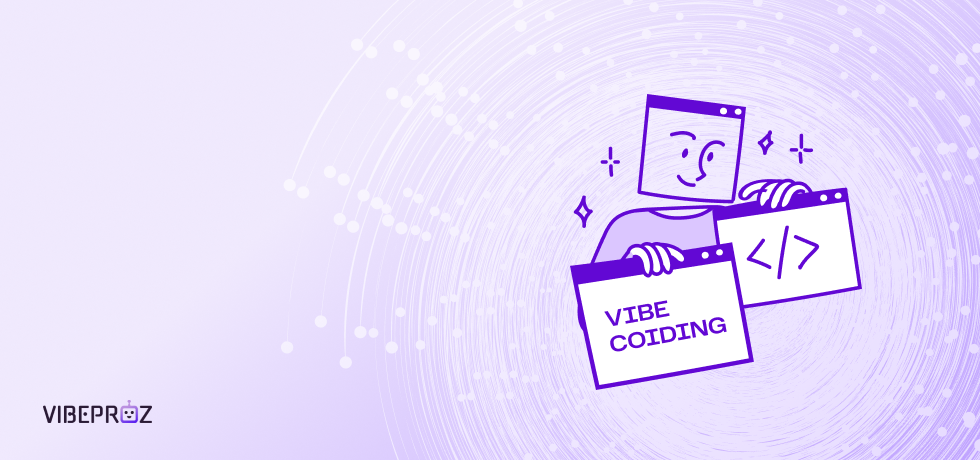
When Collins Dictionary named “Vibe Coding” as the Word of the Year 2025, it wasn’t for shock value. The shortlist itself was full of terms about people navigating tech—clanker, aura farming, broligarchy, biohacking. Vibe Coding rose above the rest because it captures how developers build software today in a world where AI has become an everyday collaborator. For organizations balancing speed with reliability, the selection is a clear signal of where development norms are heading.
What is Vibe Coding?
Vibe coding is the use of AI through natural language to write code. You describe what you want, the AI drafts it, and you shape it into the final version. Andrej Karpathy coined the term to describe building software while “forgetting the code even exists,” though he later noted that vibe coding alone can’t carry a project all the way to production—a gap explored in Why Vibe Coding Alone Can’t Cut It.
Why Vibe Coding became the word of the year 2025
AI fundamentally changed the entry point of software creation. That simple shift exploded in popularity because developers no longer crack open a blank file and stare down a problem from scratch. They start from a vibe—an idea, a direction, a pattern—then iterate with AI assistants that scaffold the logic, generate structures, and fill in the gaps. It’s fast, it’s intuitive, and it mirrors how humans naturally think before they code.
But the rise of vibe coding isn’t just a developer story. It’s a societal one. It disrupted the long-standing barrier between “people who code” and “people who don’t.”
Anyone can now tell an AI, “Build me a diet planner” or “Create a fitness tracker,” and get a functional starting point. That democratization of software creation is precisely why vibe coding dominated global search trends, social discourse, and industry workflows throughout this year.
People don’t think in syntax anymore—they think in intent. Coding no longer begins with loops or rigid structures. The starting point is a goal, expressed through a natural-language conversation with an AI.
Collins Dictionary chose Vibe Coding as the Word of the Year because it shows how modern computing is shifting toward idea-first, AI-assisted creation—and how quickly the world is catching up.
But, vibes don’t scale alone
Vibe coding is great for quick prototypes and exploring ideas, but production asks for something sturdier. Once you move from “this is cool” to “this must run reliably and securely,” you need standards, governance, and discipline. That’s the gap Karpathy pointed to. It wasn’t a warning about AI; it was only a reminder that experimentation and real shipping live in different worlds.
Where VibeProz fits into the Vibe Coding moment
VibeProz is a team of specialists who turn AI-generated ideas into stable, production-ready software. Instead of organizations juggling separate experts in architecture, engineering, validation, policy, and AI workflow design, VibeProz delivers them as a unified service. Whether it’s a large engineering org or a solo builder, we create the right AI workflows so prototypes mature smoothly into reliable systems.
What the word of the year means to us
The rise of Vibe Coding shows how mainstream AI-native development has become, shifting even non-engineers toward creating conversational software. For engineering leaders, this moment brings new expectations, and they’re rewriting the processes and guardrails in real time. Strong expertise matters now more than ever, and teams that define their AI-first workflows today will shape their engineering culture for years to come. If you’re navigating that shift, reach out to us at contact@vibeproz.ai.